Couscous: The Heart of Moroccan Cuisine
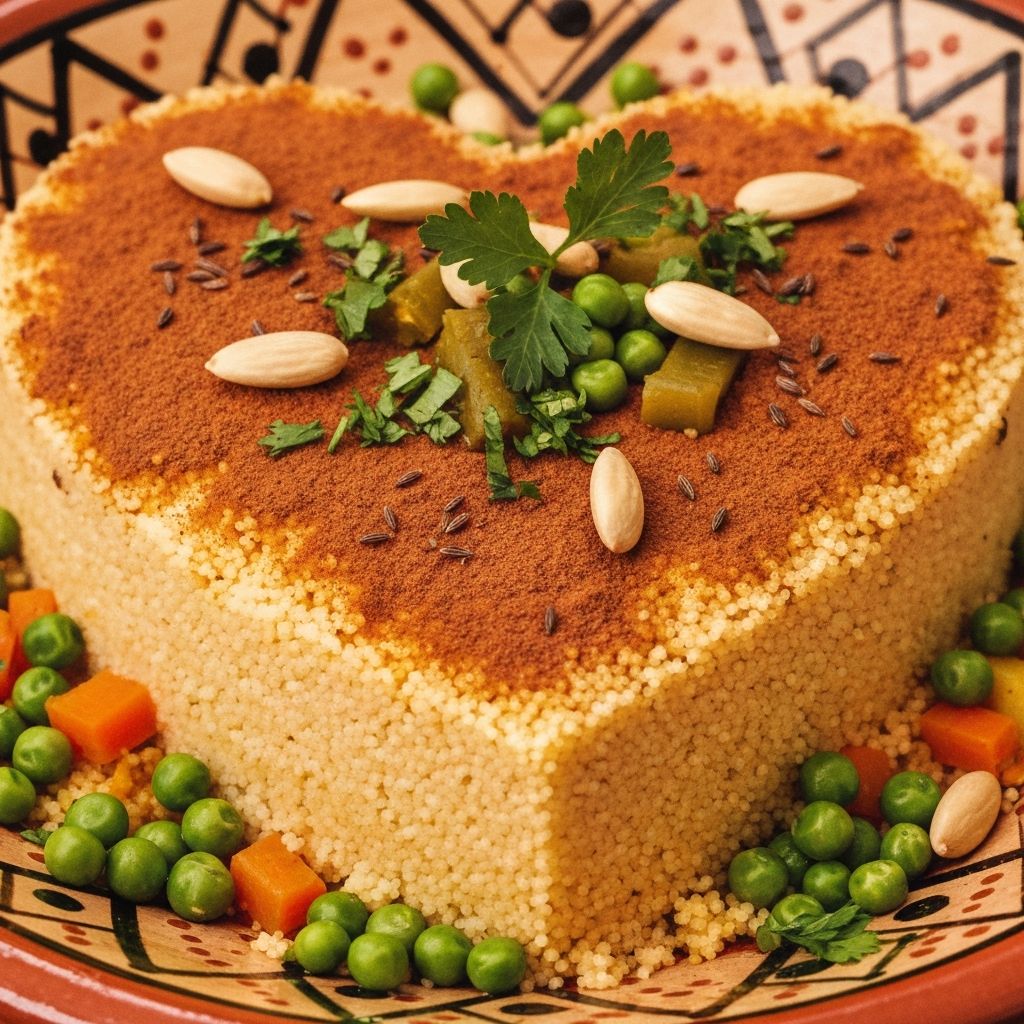
Couscous is more than just a staple food in Morocco; it's a cultural institution, a symbol of hospitality, and the culinary heart of North African cuisine. Its importance is so profound that UNESCO has recognized the tradition of sharing couscous as an Intangible Cultural Heritage. ## A Brief History The origins of couscous trace back to the Berber people of North Africa, where it has been prepared for over 1,000 years. The word "couscous" likely derives from the Berber term "k'u k'u s," which refers to the rolling motion used to shape the semolina into tiny grains. ## The Art of Preparation Traditional couscous preparation is a labor-intensive craft that was historically performed by hand. Semolina is sprinkled with water and salt, then rolled by skilled hands to form the characteristic pearl-like grains. This technique requires practice and precision to achieve the perfect texture. ## Cultural Significance In Moroccan culture, couscous is typically served on Fridays after prayers and during celebrations and family gatherings. The sharing of couscous brings families together and represents unity, generosity, and the importance of community. Each family has its own treasured couscous recipe, passed down through generations. ## Modern Appreciation Today, couscous has gained international recognition and is enjoyed worldwide. Whether traditional or modern, couscous remains a connection to Moroccan heritage and an invitation to experience the flavors of authentic Mediterranean cuisine.