From Field to Table: Moroccan Olive Oil Production
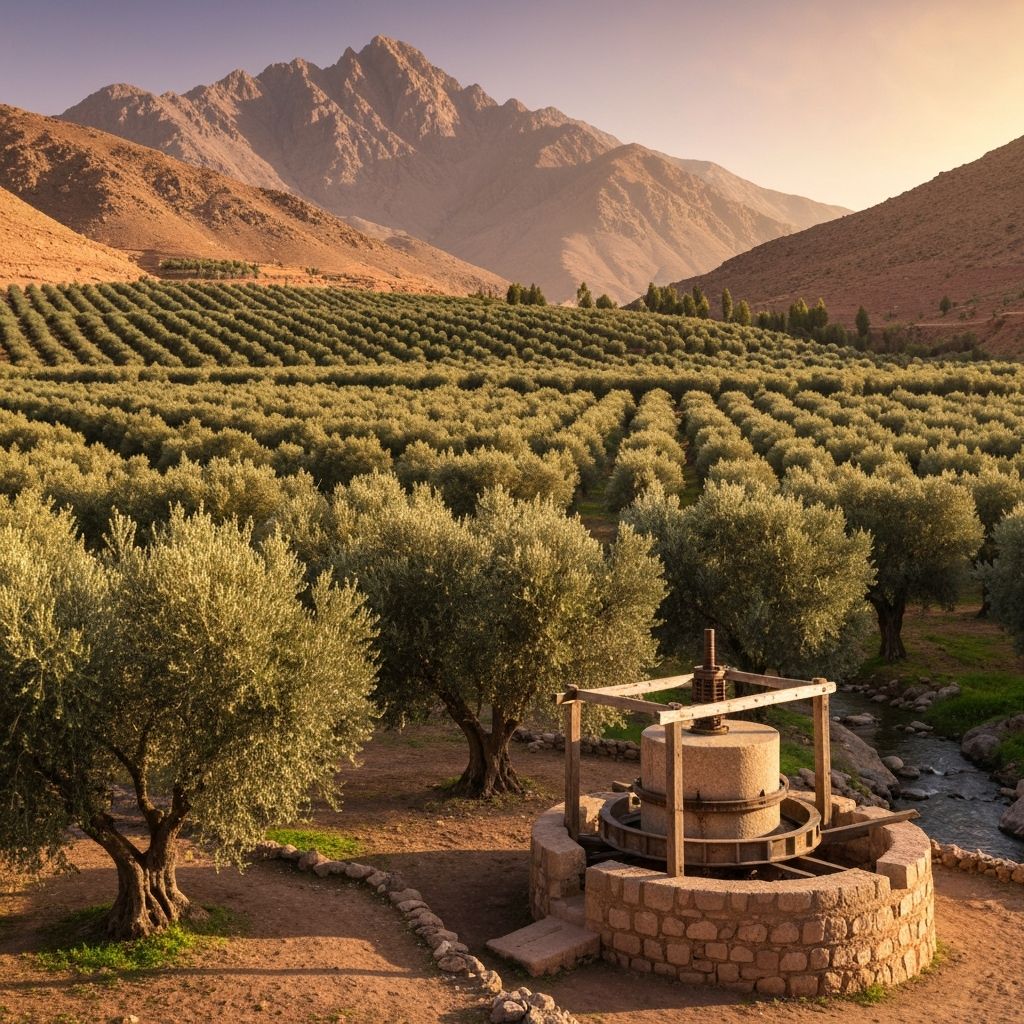
Morocco's olive oil production tells a story of ancient tradition, challenging mountain terrain, and a deep commitment to quality. Nestled in the Atlas Mountains, olive groves have thrived for millennia, producing some of the world's finest virgin olive oils. ## The Heritage of Moroccan Olives Moroccan olive cultivation dates back to ancient times, with evidence suggesting that olive trees were present in the region as far back as the Phoenician era. Today, Morocco is one of the world's leading olive oil producers, with a production area covering over 500,000 hectares. ## The Mountain Advantage The unique climate and altitude of the Atlas Mountains create ideal conditions for growing olives. The cool nights and sunny days allow olives to develop complex flavors, while the mineral-rich soil contributes to the oil's distinctive taste. This combination of factors produces an exceptionally high quality virgin olive oil. ## The Production Process Traditional Moroccan olive oil production involves hand-harvesting olives at peak ripeness, followed by cold-pressing within hours of harvest. This meticulous process preserves the oil's natural flavors, aroma, and nutritional benefits, resulting in a golden-green oil with a fruity, slightly peppery taste. ## Sustainable Practices Many Moroccan olive oil producers are committed to sustainable and organic farming methods, preserving the environment for future generations while maintaining the integrity of their product.